

POST-TRAUMATIC SLAVE SYNDROME
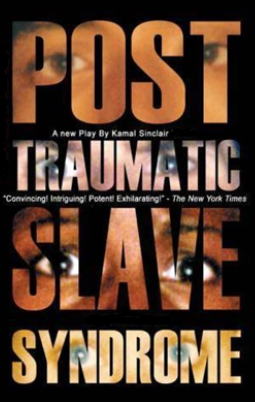
Post Traumatic Slave Syndrome was a groundbreaking play, written by critically acclaimed theatre maker Kamal Sinclair and based on the research of sociologist Dr. Joy DeGruy, that delivers a gut wrenching, eye-opening, and ultimately uplifting perspective on the complex and emotionally charged issues of contemporary race relations.
The play illustrates the present effects of racial-inequity-based multi-generational trauma in North Americans of African and European descent. Dr. DeGruy’s theory of Post Traumatic Slave Syndrome serves as the overarching context for exploring race relations in the United States. Her work postulates that the African American community has suffered from the causes and exhibits all of the traditional symptoms of Post-Traumatic Stress Disorder, and explores the idea that North American chattel slavery itself was the inevitable consequence of a collision of fundamentally different value systems or axiology. Post Traumatic Slave Syndrome investigates these ideas using theatre, dance, music, and performance art to create a multifaceted, theatrically and emotionally charged work that viscerally illustrates Dr. DeGruy’s strictly academic approach.
Originally, the play was produced at the Henry Street Settlement in New York City (September/October 2001) under Fractured Atlas and Universal Arts, with co-direction by Obie and Bessie Award Winner Robbie McCauley. In 2002, Kamal Sinclair made substantial rewrites to the second act, which focuses on the parallel psychological injuries suffered by White Americans.
“…convincing…intriguing…potent….exhilarating multimedia theater work…A refreshingly basic analysis of deeply held values.” - The New York Times, September 14, 2001 (Anita Gates)
“Universal Arts' therapeutic use of theatrical performance as a tool for exposing, understanding and ultimately re-imagining destructive patterns of emotion and thought may be just what the doctor ordered as the nation, our city, and the theatrical community begin to grapple with an awful aftermath…the drama rested on the able shoulders of Universal Arts' versatile ensemble, who invested the presentation with passion, power and unflinching commitment.
…a provocative and inspiring theatrical exploration which dares to suggest that we, as a nation, can identify, understand and move beyond the traumatic stresses of our history. A comforting and inspiring idea: now more than ever.” - The Off Off Broadway Review , September 2001 (Jonathan Shandell)
“An earnest, honest and absolutely necessary theatre work about race relations in the United States.” - NYTheatre.com
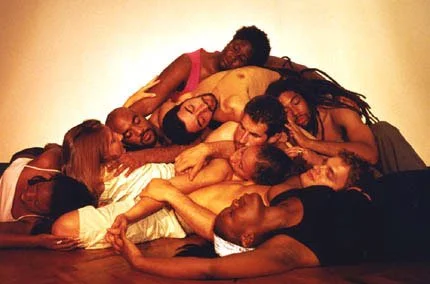
“…it's great to see a show that's about ideas, in the way that books and school and talking over coffee and sometimes Oprah are about ideas, but one that also goes a long way toward making the ideas palpable through theater. The final question presented by the show — in memorably visual fashion — is not "Can't we all get along?" but rather, "Can we all fall in love with each other?"
This is no small issue in a country in which, although few people would call themselves racist, most white people's friends are white and most black people's friends are black. What would it take to turn back the clock so that the races meet again on a basis of love and togetherness and intermingling? If there's a way to continue that discussion, it would be a fulfillment of what this play stands for.” - Off Off Off Theatre, September 24, 2001 (Joshua Tanzer)
“Potently theatrical and emotionally wrenching.” - TheaterMania.com
“…a highly serious examination of the effects of slavery and racism on generations of African-Americans…” - New York Amsterdam News, October 10, 2001 (Alice Richardson)