

Miss Perfect, a novella
Miss Perfect is a science novel rooted in the bioengineering and neurotechnology breakthroughs of 2025 and 2026. It does not invent the technologies it depicts, it extrapolates them. Every device, every biological capability, every market force in this world has a named ancestor in a clinical trial registry or a peer-reviewed journal published before this manuscript was written. The fiction is not in the science. The fiction is in the people living inside it.

The World
The novel takes place in world that has adopted genetic pre-design, embedded neurological enhancement, bio-aesthetic engineering, and continuous optimization technology. These adoptions have created evolutionary adaptation of symmetrical beauty, peak cognitive performance, emotional regulation, physical endurance. These enhancements are not exceptional, but expected. Expected by parents for their children. Expected by employers. Expected by culture. The enhanced are the new normal.
And like every new normal in human history, it has produced its own kind of suffering hidden inside a body that looked like a dream.
The social landscape is established through three categories of people:
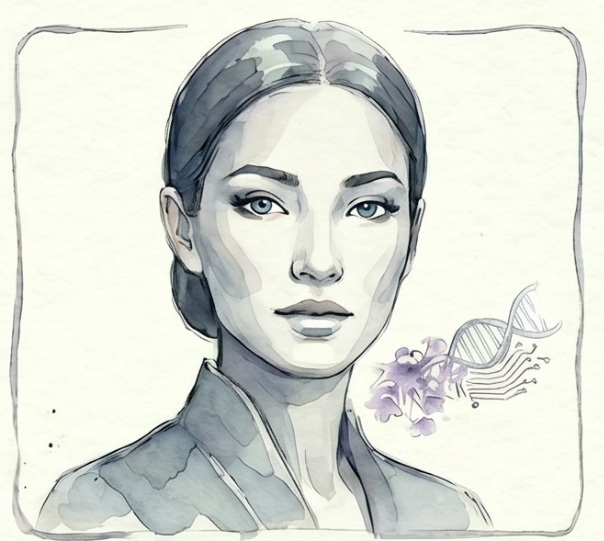
Those whose parents opted into enhance them through genetic/biological design packages, with ongoing "tune-ups" throughout life. They don't age visibly very much, rarely scar, have expanded cognition and regulated emotions. Their neural interfaces feel completely natural to them. Enhancement is as invisible to them as electricity.
Those who opted out, but for a range reasons: economic barriers, body and data sovereignty, justified distrust of medical systems, and a growing principled upper-class counter-movement. Those that are natural carry the full record of their lives in their body in the form of scars, aging, natural change, which the world reads either as beauty or as failure, depending on who's looking.
Others occupy a complex middle ground: people with some enhancements, like medical or assistive technology such as the cochlear descendants, limb bio-interfaces, neurological stabilizers that ended severe depression and childhood epilepsy. They also include aesthetic enhancement in the tradition of drag culture or other cultural practices of body augmentation such as creative expression, religious practice, and tattoos. Of course, people that have continued the long legacy of transgender body modification to better align their bodies with their identity.
Altadena stands out as a hub for those who understand what's lost when it engineers its imperfections out of its culture. The city residence are mostly natural or low-level enhanced, but they are not anti-technology. Some of them have assistive enhancements they are grateful for.
They are weary of enhancements that a person does not choose and performance optimization that serves the economy more than the person.
The world isn't dystopian, it's familiar. Coffee shops, bad dates, school arguments. But desirable body and brain standards have shifted from aspirational to architectural, and millions of young people are living inside someone else's design spec.
The Origin
I had three experiences in 2014 that led to the idea of Miss Perfect.
My Son
When my son was in the 6th grade, I heard a news story about college students who were using cognitive performance enhancing drugs to be more competitive in school, and eventually become more competitive on the job market. The report also talked about how expensive these enhancers were and how that could further economic disparity.
In the moment, a worry emerged. My son already had a few strikes against him in terms of competitiveness because he was a Black boy and neurodivergent. Would he have to take these kinds of drugs to survive in his future? What if he and others refused? Would they get left behind? Would their compliance with the new normal make it even harder for others to refuse?
This was also when I started to learn more about advocacy movements working to change the conversation about neurodiversity by encouraging people to see more than the deficits and understand that this mix of different ways of thinking is an essential and ancient part of humanity's overall success, survival, wellbeing.
This was something I learned from my own experience of being a mother to a child on the autism spectrum. A child who surprised me daily with his depth of inquiry, his brilliance, and his beautiful empathy.
I remember walking on a street, that same year, that had so many fallen purple flowers from the line of jacaranda trees that it was like walking on pillows. I commented on how beautiful it was and he said, "We're walking on stardust. We are all stardust." This is just one of the examples of how he saw the world, a few levels removed from the pedestrian in both macro and micro perspectives.
Years before, when he was around 8 years old, I asked him a hard question: "If there was some medical breakthrough and you could choose not to be autistic, would you want that?" He replied, "I would never want to be like you guys (meaning neurotypical)." Wow! Our society really misses so much by limiting ways of knowing and experiencing life by centering "normal" as best.
On the other hand, I have seen the benefits of assistive technologies and mental health medications that have been critical in managing the downsides of different kinds of brains, which can be transformative for those who'd been slipping through the cracks.
My Body
At this same time, I was a little less than a year post-pregnancy. My third. I was approaching middle age, had about 50 more pounds on me, and felt a bit weathered from being a workaholic single mother of three. However, I remember feeling so liberated from the things that came with being a young woman with a dancer's body and a passable pretty face, in a community that suffered from colorism, and therefore pitted my physical appearance against darker-skinned women…no matter how much more beautiful they were (in my opinion).
In this new body and age, I found that I was more invisible as a romantic or sexual conquest, or a threat to someone else's romantic or sexual prospects. Dynamics that go far beyond the dating scene and into almost every part of life. Professionally, my ideas and talents were more valued. I didn't have to spend an inordinate amount of energy warding off unwanted, and often aggressive, advances. I didn't have to prove humility when walking into a space of women who assumed I thought I was better. I was of an age where people assumed I was responsible, instead of having to prove it all the time. I also enjoyed the ability to be invisible in public, because I was able to observe more, rather than be observed. I remember looking at a woman at the Sundance Film Festival that year who was young, beautiful, at the top of the colorism scale, creative and smart, trying to advance in a film industry still dominantly controlled by people, that later showed up in the Epstein files, and feeling relieved I didn't have to be her: Miss Perfect.
The Technology
Finally, in 2014, I was immersed in the world of science, technology, media, and storytelling as the director of Sundance Institute's New Frontier Story Lab. It gave me a vantage point on the rapidly emerging breakthroughs in bioengineering, bioware, cyborg technology, wearables, embeddables, and other areas that were figuring out how to become superhuman.
These three experiences, happening at the same time in my life, led me to want to write this story. Hopefully, allowing me to unpack some of the complexity of what it means to be human in a world of rapid technological and scientific advancements that give us new capabilities to determine the evolution of our species.
The novel allows me to play out my experiences of being in identities that were "desirable" and "less desirable" in a world where the assumptions of what is "desirable" take our current norm to extremes.
The people inside this world try to resolve these complexities and contradictions cleanly, but my assumption is they, like me, will have to hold all of it at once and try to find a shared understanding of what is worth optimizing and what is worth mitigating to achieve well-being (if that is even the true goal).
The Story
Amara is six months pregnant and unpartnered by choice, carrying a daughter selected from her own parents' (a bioengineer and cyborg technologist), design. Her company sends her to spend a season embedded in a research project in a mixed Natural/Enhanced neighborhood in Altadena. Her assignment is to study quality-of-life metrics. Her unspoken assignment is to decide what to do about her daughter. The first round of in-utero edits has not yet been authorized. There is a window. Amara has not signed.
There, she meets Soleil.
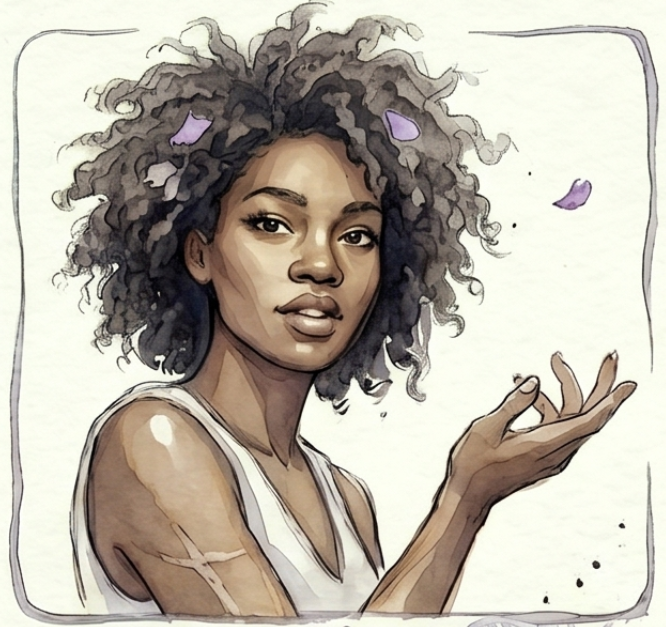
Soleil is 31, Natural, darker-skinned in a way Amara's parents quietly engineered out of her at the chromosomal level. Amara has her grandmother's bone structure and none of her grandmother's color. Soleil has a scar along her left forearm she wears like jewelry. She carries her weight in her hips and belly. Her teeth are slightly irregular. She cries in public. She laughs too loud. She changes her mind. She changes from no make-up to wildly creative make-up on a whim. She is, in the language of Amara's world, unoptimized. And she is one of the most alive people Amara has ever encountered.
Soleil is an artist who produces community cultural experiences. She is also the mother of a seven-year-old boy, Téo, who is Natural and neurodivergent, a diagnosis his pediatrician offered as a problem to solve. Soleil declined the cognitive interventions and accepted the other kinds of support to help him sleep, regulate, and navigate sound. There are enhancements that close cracks people fall through, and there are enhancements that close people. Soleil knows the difference. So does Téo.
Téo is creative, kind, stubborn, brilliant, and a few levels removed from the pedestrian. The first time Amara meets him, he is crouched on a sidewalk dusted with fallen jacaranda blossoms. He looks up and says, "You’re walking on stardust. Everything is stardust…even you." Amara, whose neural architecture produces calibrated emotional responses, finds herself crying in a way her interface does not recognize and cannot smooth. She asks Téo, carefully, whether he would have wanted to be born different. The way she means it is fixed, though she does not say the word. He tilts his head, to look at a beetle crawling on one of the purple flowers and says, "I would never want to be like you guys." He says it without cruelty. He says it the way someone might decline a flavor of ice cream.
Amara has spent her entire life inside the assumption that her architecture is the destination. It has not occurred to her, until this child, that someone might look at it and politely decline. Soleil does not envy Amara's “perfection,” and Amara does not simply want Soleil's freedom. It is more complex than that. Soleil has been passed over for opportunities because she doesn't present the way Enhanced individuals do. She has watched gallery directors look past her to smoother-skinned curators with calibrated voices. She has been called "brave" for existing in her own body. She is not a saint of imperfection. She is a person navigating a world that is no longer designed for her, raising a child the modern world was never designed for.
Amara is not oppressed in the way Soleil is. The novel holds that asymmetry honestly. Amara walks into rooms and the rooms reorganize around her. Although, she often finds her ideas are overshadowed by her looks and not just by people that physically desire her. She also finds she is subtly chastised when she makes mistakes or fails to reach the highest standards of excellence in her work, appearance, or social status. She feels “on” all the time. She fears not fulfilling her potential. She feels a personal responsibility to use the privilege of being enhanced to “save the world” or at least make it more perfect.
What Soleil and Amara build together is something more interesting than an exchange: it is a mutual witness. And in Téo, Amara sees something she has not been allowed to consider, that her daughter, undesigned, might also see things she has been engineered not to see.
As her pregnancy progresses, Amara begins a voluntary partial reversal of non-medical enhancements, a process called de-tuning. She does not tell her clinic. She does not tell her mother. This is not celebrated uncritically in the novel. De-tuning during pregnancy is medically complicated and carries real risk. It is, in some circles, treated as self-harm dressed up as liberation. Some women de-tune for the right reasons. Some for the wrong ones. Amara has to figure out which is true for her, and she has to do it before the next signature comes due.
Some people don't de-tune. They simply stop maintaining. They miss tune-up appointments. They let their bodies drift toward whatever they would have been. They gain weight. They let the emotional regulation calibration lapse. They scar. They let themselves go in the richest possible sense of that phrase: they let themselves go somewhere.
There is a scene where Amara, in her seventh month and visibly de-optimizing, attends a neighborhood gathering and is simply there. She is not exceptional. She is not performing leadership. She is not being admired. She helps carry chairs. She listens to an argument about zoning. She laughs at a bad joke. Téo falls asleep against her shoulder. She is no one of note, and the daughter inside her is moving in a body that has finally stopped being managed from a distance.
It is the most present she has ever felt in her life.
The novel develops a rich visual and philosophical language around “marking” or the ways bodies record time, experience, injury, and survival. Several supporting characters carry scars the narrative treats with the gravity of sacred text.
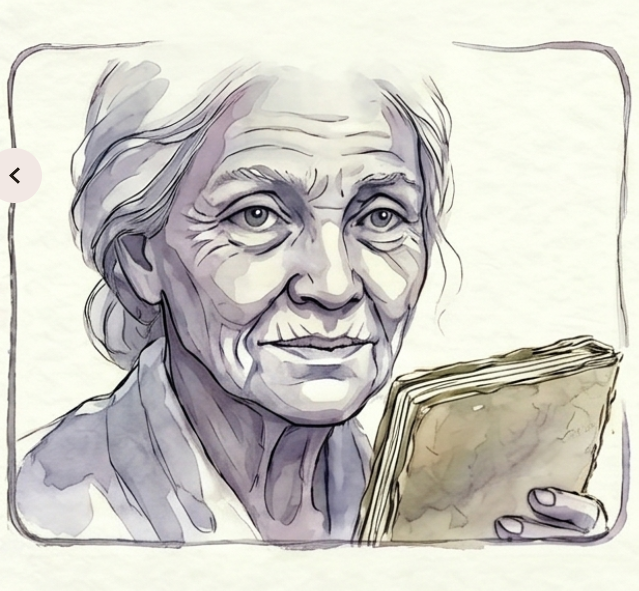
Aunt Cléo, a Natural woman in her eighties, becomes a kind of oracle figure. She looks so much like Amara, she could be an older version of her, in the way Amara was prevented from being. Her face at eighty is a cartography of her entire life, and Amara finds herself wanting to learn to read it the way she reads any landscape she loves. Cléo does not romanticize Natural life. She buried two children inside a healthcare system that did not see them. She remembers what colorism cost her mother, what it cost her, and what the new aesthetic optimization is quietly doing to the same hierarchy under a different name. She also remembers what was built inside her life, a kind of beauty the Enhancement catalogs were never able to translate, and so eventually stopped trying to.
"Smooth people are like a new notebook. Beautiful. Promising. But I want to read a book that's been written in." — Aunt Cléo, Miss Perfect
There is a scene at a cultural festival in Altadena. Amara, eight months pregnant and visibly drifting, watches a young Enhanced woman move through the crowd. The woman is twenty-three, immaculate, the optimized image of social magnetism in a creative industry that still rewards exactly that. Men orbit her with the particular aggression that hasn't changed across any version of the species. The woman handles it all with calibrated grace, but she is exhausting to watch. Amara, whose hips ache and whose hair has not been smoothed in a month, looks at her and does not feel envy. She feels something closer to relief. I don't have to be her anymore.
The novel does not resolve the question of what Amara should do for her daughter. The clinic sends three reminders. Her mother does not understand the question. The window closes on its own schedule. What Amara learns in Altadena is not what to choose. It is that the choice was never between optimization and authenticity. It is between which suffering is worth carrying, which gifts are worth losing, and who gets to decide… in a body, in a child, in a culture… what is worth being kept whole.
She holds all of it at once. Like Soleil. Like Cléo. Like Téo, asleep in her arms, dreaming in stardust.
Miss Perfect © 2013 by Kamal Sinclair