

Question Bridge: Ancestors
This version of Question Bridge: Black Males gives historical figures profiles in the Question Bridge system, alongside the living participants. A profile holds the person's questions and the person's answers, drawn only from what they actually left behind.The exchange runs in both directions.
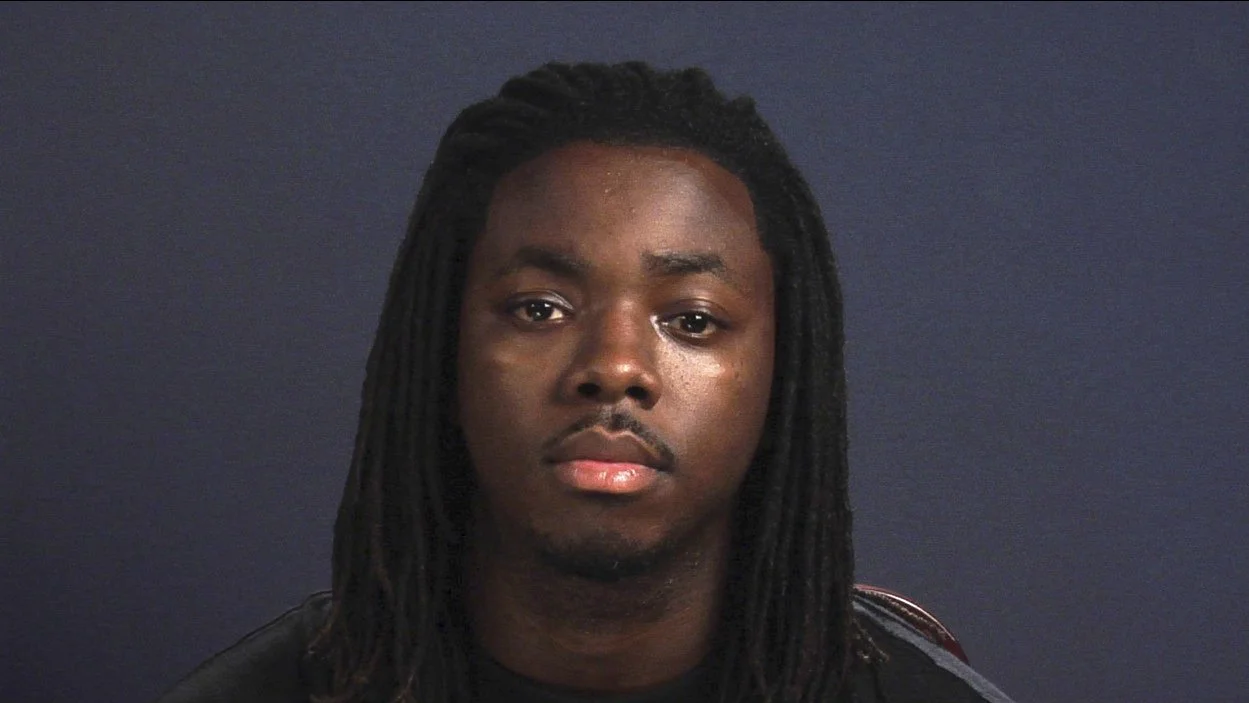

Q. "I try to live good but I'm surrounded by bad and I want to know what I could do to do better and live peaceful surrounded by all evil. How can I do that?" — Anthony Vaughn [QB archive]
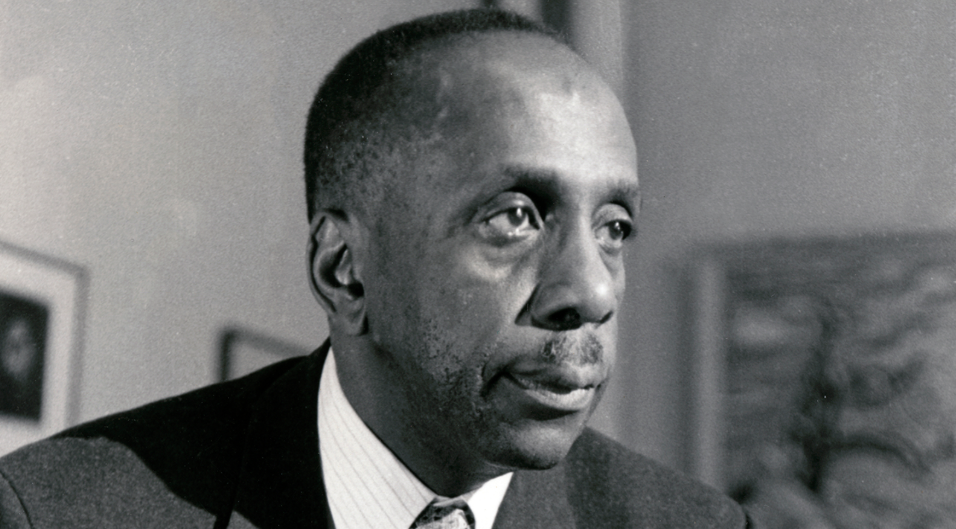
A. "They must recognize fear, deception, hatred, each for what it is." — Howard Thurman, Jesus and the Disinherited, 1949
A. "Hate cannot drive out hate: only love can do that." — Martin Luther King Jr., "Loving Your Enemies," Dexter Avenue Baptist Church, Montgomery, November 17, 1957
A. "Cassius Clay is a slave name." — Muhammad Ali, to reporters, 1964
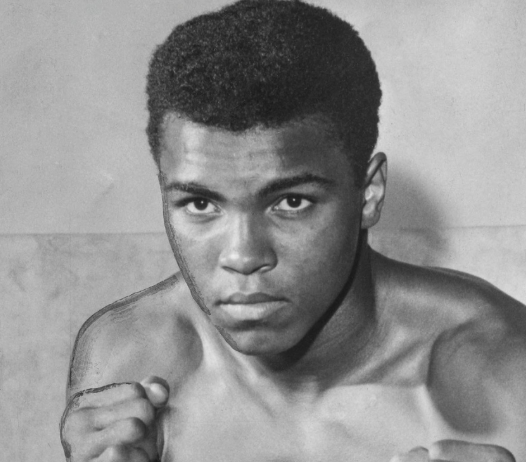
**With the recent development of Question Bridge: America, this idea of including ancestors as participants might be something weaved into both versions, instead of creating a stand-alone project.
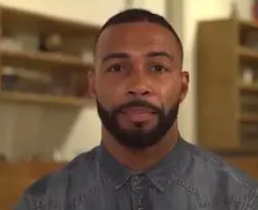
Q. "Have you had problems navigating life with the name your mother or father gave you?" — Omari Hardwick [QB archive]
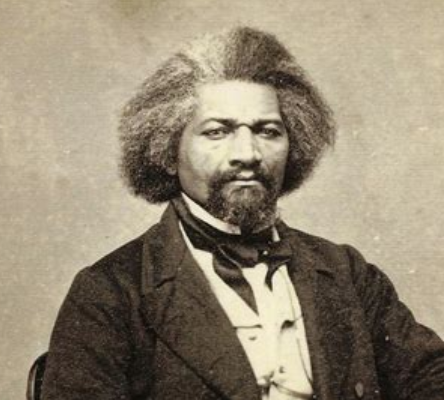
A. "I must hold on to that, to preserve a sense of my identity." — Frederick Douglass, Narrative of the Life of Frederick Douglass, ch. XI, 1845
How it works.
Ancestors answer the living. A question recorded in Question Bridge: Black Males is matched to a passage where a historical figure addressed that exact thing, in a book, a letter, a sermon, a court transcript, a newspaper column, a broadcast interview. A living Black man reads the passage on camera. The answer enters the bridge as a video response like any other.
Ancestors ask the living. The same archives are full of questions, most of them never answered. Those get filmed too, read aloud, and posted back into the project for living men to answer.
A man in the present says the words with his own mouth and his own body, and the citation stays visible on screen. Every word attributed to an ancestor is traceable to a document, a recording, or a transcript, cited to a page or timecode.
Where it came from
In 2010, while developing Question Bridge: Black Males, we sat down with Khalil Gibran Muhammad, then director of the Schomburg Center for Research in Black Culture in Harlem, to share early cuts of our video exchanges. He watched quietly, taking them in with deep concentration. His reaction cut straight to the core: so many of the questions these men were wrestling with had already been asked by Black men generations before.
Sitting inside the Schomburg, surrounded by letters, pamphlets, autobiographies, and archival transcripts, he saw the toll of cultural amnesia. Men dead fifty or a hundred and fifty years had committed their lives to dissecting these exact dilemmas, yet here was a new generation starting entirely from scratch. You could hear the edges of his frustration.
He understood, naturally, that every generation must arrive at its own questions. Inherited answers rarely carry the weight of those earned firsthand. We talked about how radically conditions shift across eras, mutating the very nature of our inquiries. A man in 1903 asking whether he must shrink himself to survive is not asking the exact same question as a man in 2016. Yet the elder’s reflections hold vital wisdom for the younger. Past answers also serve as a diagnostic tool, revealing how far we have distanced ourselves from obsolete ideas and offering a clearer view of change in all its progress and retreat.
Khalil’s instinct sparked a brainstorm of ideas about bridging the gap between the learning generated by our ancestors and the living, which became Question Bridge: Ancestors. Why leave them on the shelf as static citations, when they could be in conversation with living participants.
Example exchanges
Questions marked [QB archive] are verbatim from the Question Bridge: Black Males participant record. Every ancestor line below is quoted from the source named under it. In the installation each answer runs at the length of the full passage; these are the lines the passages turn on.
Q. "If you had a son and your son told you he was gay, how would you take it?" — Demario Patton [QB archive]
A. "I suppose that's what you need to do." — Julia Rustin to her grandson, recounted by Bayard Rustin in a recorded interview
Q. "How does the representation of Black folks affect who you are?" — Anthony Trochez [QB archive]
A. "always looking at one's self through the eyes of others" — W.E.B. Du Bois, The Souls of Black Folk, ch. I, 1903
A. "We know we are beautiful. And ugly too." — Langston Hughes, "The Negro Artist and the Racial Mountain," The Nation, June 23, 1926
Q. "Michael Jackson or Prince?" — Omari Hardwick [QB archive]
A. "There are simply two kinds of music, good music and the other kind." — Duke Ellington, 1962
Q. "What does a Black man have to do to make it in this country?"
A. "Cast down your bucket where you are." — Booker T. Washington, Atlanta Exposition address, September 1895
A. "The Negro race... is going to be saved by its exceptional men." — W.E.B. Du Bois, "The Talented Tenth," 1903
From W.E.B. DuBois
Q. "How does it feel to be a problem?"
Q. "Does the Negro Need Separate Schools?"
Q. "Would America have been America without her Negro people?"
A. ?
From Frederick Douglass
Q. "Why am I a slave?
Q. Why are some people slaves, and others masters?
Q. Was there ever a time this was not so?
Q. How did the relation commence?"
A. ?
From Muhammad Ali
Q. Why should I travel thousands of miles to fight people who never called me a slur, while my own people were denied rights at home?
A. ?