

The Mechanic
A feature film by Jeremy Smith in collaboration with Robert Sinclair and Kamal Sinclair
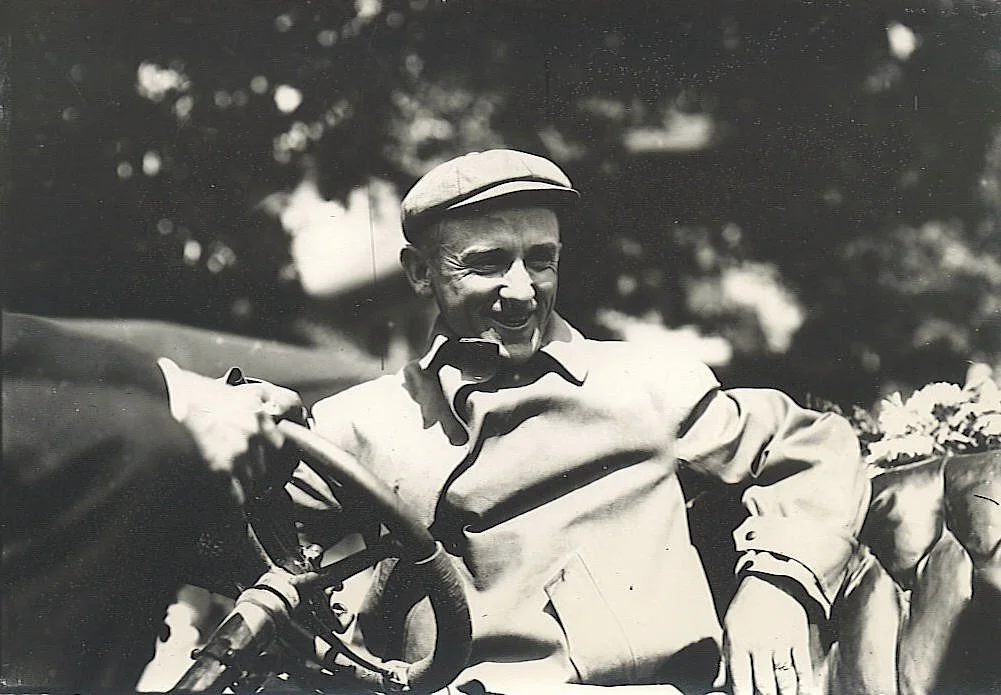
In 1908, six cars left Times Square on the first automobile race around the world: 22,000 miles westward across a roadless America, Alaska, Japan, Siberia and Europe, to Paris. Only one man made the entire journey. George Schuster, a Buffalo mechanic sent along as an afterthought, stayed with the car as the star drivers handed off the wheel and went home, and as rival teams quit or cheated. He rebuilt the car night after night, fetched a transmission by horse-drawn wagon across Russia, and limped into Paris by the light of a stranger’s bicycle lamp. He won. The headlines credited the car.
The Mechanic is a historical drama about a quieter kind of manhood: humble, useful, honest and calm, at the moment the twentieth century learned to celebrate the brand, the celebrity and the spectacle instead. The film also brings into view the people the record left out: the farmers, women, Indigenous communities, and Russian and Asian villagers who, who are often decentered in narratives of American exceptialism, which this film aims to resist.
Overview
The Mechanic is a historical feature film about the 1908 New York-to-Paris race, the first automobile race around the world. It follows the quiet Buffalo mechanic who was added to the American team the night before the start. Over 22,000 miles of snow, mud, desert and ice, the star drivers come and go and rival teams cheat or quit. George Schuster is the only man who travels every mile. He brings the car into Paris to win, and the world gives the credit to the car.
The film celebrates a kind of masculinity that was about to drop out of the record: humble, quiet, useful, honest and calm, measured by what a man fixes and finishes. George’s story is one thread in a larger tapestry. Around him are the farmers, Indigenous nations, cowboys, miners, porters, villagers and peasants along the route, who met the machine with help, curiosity and resistance.
Story
On February 12, 1908, a quarter of a million people pack Times Square in falling snow. They are there to watch cars from four nations set out for Paris, heading west across America, Alaska and Siberia. France, Germany and Italy have entered custom-built machines. The only American entry is an ordinary Thomas Flyer, pulled off a showroom floor three days earlier and captained by the celebrity driver Monty Roberts. George Schuster is the company’s road tester, whose job is delivering new cars and teaching their owners to drive. The night before the start, he is told to get on the overnight train.
Across the American winter, George walks ahead of the car probing snowdrifts with a stick. While the others sleep, he works under the car until midnight. One by one the headline drivers take the wheel and leave. Roberts goes at Cheyenne to race the French Grand Prix, and the hired drivers leave in Utah and San Francisco.
On July 30 the Flyer limps into Paris caked in mud, its lamps broken. A gendarme stops it for having no headlight. A cyclist lifts his bicycle, lamp and all, into the car and steps back, so the last stretch of 22,000 miles is lit by a stranger’s lamp. The Thomas wins by 26 days.
The narrator is Antonio Scarfoglio, the vain, lyrical young poet of the Italian team, whose real dispatches give the film its period voice. Over the film he learns to see a man who doesn’t perform. The story opens and closes in a Reno warehouse in 1964, where George, now 91, recognizes the battered car by a repair he made in Siberia.
Why
The 1908 race was a stage for performative masculinity: national pride, aristocratic rank, newspaper fame and near-duels over snowdrifts. George moved through it as its opposite. The film sets the two side by side, scene by scene: chest-thumping against humility, noise against quiet, arrogance against confidence, mockery against protecting the weak, deceit against honesty, chaos against calm.
By the end, the record keeps the performances and drops the man. The headline credits the car, the papers misspell his name, and his own company wants the star driver back for the glamorous part. The twentieth century was learning to celebrate the brand, the celebrity and the spectacle. The film asks what was lost when it stopped seeing men like George. It asks that now, while a louder, performative masculinity of bullying, arrogance and misogyny keeps growing.
The film honors George’s grit without making him an emblem of American exceptionalism, or a story of one white man conquering the world. In 1908 many people didn’t want the automobile at all; farmers scattered tacks and fought paved roads. The film treats them as people defending a way of life, not comic Luddites.
It also knows what came after. The race helped turn the country’s attention to its roads. The Lincoln Highway and federal road-building followed, and then car culture, suburbs, the decline of rail and the environmental cost of an oil economy. George’s decency and endurance are real, and so is the system his victory helped build. The film lets both stand without forcing a verdict.
Context
George is the heart of the film, but this isn't a story of American exceptionalism, or of one white man conquering the world. The race crossed dozens of communities in America, Asia and Europe, and each met it with its own mix of help, curiosity, profit, suspicion and resistance. The film tells the story of George, but the perspective shifts throughout the film to articulate those of the people and communities along the route of the race. The film aims to tell the story of this race and this man as one thread inside a tapestry of stories of the people and places that illustrate a broader picture of intersecting and parallel experiences of the historic moment.
The attitudes and ideologies within in the United States alone varied as much as those outside of the country. In 1908 many Americans didn’t want to see the expansion of cars. They saw automobiles as rich men's toys that frightened horses, wrecked roads and killed livestock. Some towns banned them. A Pennsylvania farmers' anti-automobile society proposed mocking laws: one would have made a driver whose car scared a horse take the machine apart and hide the pieces in the bushes. In Illinois, someone stretched a steel cable across a road to stop the "devil wagons." Some rural residents scattered tacks to puncture tires and fought paved roads. The film treats these people as reasonable, not as comic Luddites. They were defending a way of life.
What the race set in motion. The race helped turn the public's attention to American roads, at a time when only about 7 percent of US highways were improved. The Lincoln Highway followed in 1913, and the first federal road-building law in 1916. After that came car culture, highways and suburbs, along with the decline of streetcars and passenger rail and the environmental cost of an oil economy. The film respects that people in 1908 believed they were building something good. It doesn't pretend not to know what came after.
Holding both. George's decency and endurance are celebrated. So is the system his victory helped build with its positive and negative consequences. The film lets all of it onto the frame without forcing a verdict.
Origin
The Mechanic was inspired by Bob Smith, Jeremy Smith’s father and the uncle of his cousins and co-creators, Robert and Kamal Sinclair. Bob has rebuilt old cars for most of his adult life. His work is so fine that people like Jay Leno and Clint Eastwood have bought his cars or commissioned him to rebuild theirs. To his family, he has been one of the kindest, most generous and most loving people they know.
Bob embodies the genuine masculinity at the heart of the film: humble, quiet, useful, honest and calm. He is also not simple, and the film doesn’t make George simple either. Bob was raised a Quaker and married a Bahá’í. He embraces his trans grandchildren and his Black son-in-law with love and without bias. He is also a fiscal Republican in a rural Nevada town of 3,000 and an NRA member, and he doesn’t believe in climate change. His son, niece and nephew don’t always share his politics, but they admire him deeply. That is the man the film honors: complicated, decent, and measured by how he treats people and what he builds with his hands.
The winning Thomas Flyer now sits in Reno, in his home state.
The Mechanic © 2025 - Jeremy Smith, Robert Sinclair and Kamal Sinclair