

The Golden Record, a film
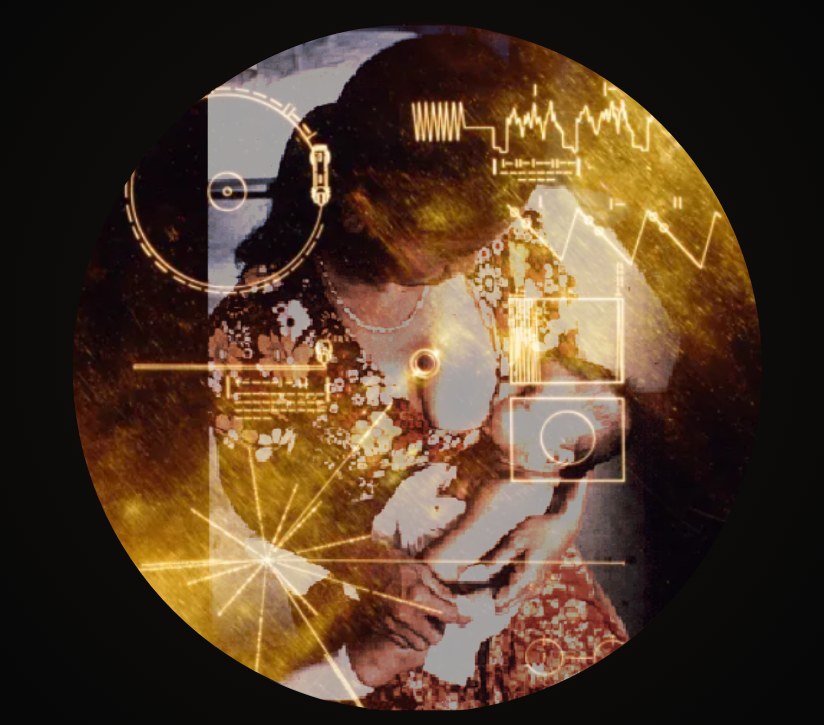
A distant civilization intercepts the data stream from the craft carrying the Golden Record. In it they find what their own biology has taught them to look for: rhythm, interval, recursion — the signature of a life-code.
They read the pattern as a genome, because that is the only way they know how to read. Then they build what it describes, using their tissue, their womb equivalent, their reproductive logic, and their certainty that this is how we introduce ourselves across a distance no one can cross.
The child is neither us nor them. It is the offspring of a misunderstanding between two peoples who each tried very hard to be understood.
THE PREMISE
The Voyager spacecrafts were designed to send two kinds of messages:
For humans. Through radio waves, they transmit engineering telemetry and science data across the void: temperatures across dozens of critical points, RTG voltage and current, thruster fuel reserves, firing counts, attitude-control orientations, computer memory states, and transmitter health. Alongside those vital signs ride readings of the interstellar medium like galactic cosmic ray counts, magnetic field vectors, and plasma oscillation frequencies.
The likelihood of receiving the data from the Voyager spacecrafts meant for humans is known.
A proven 100 percent.
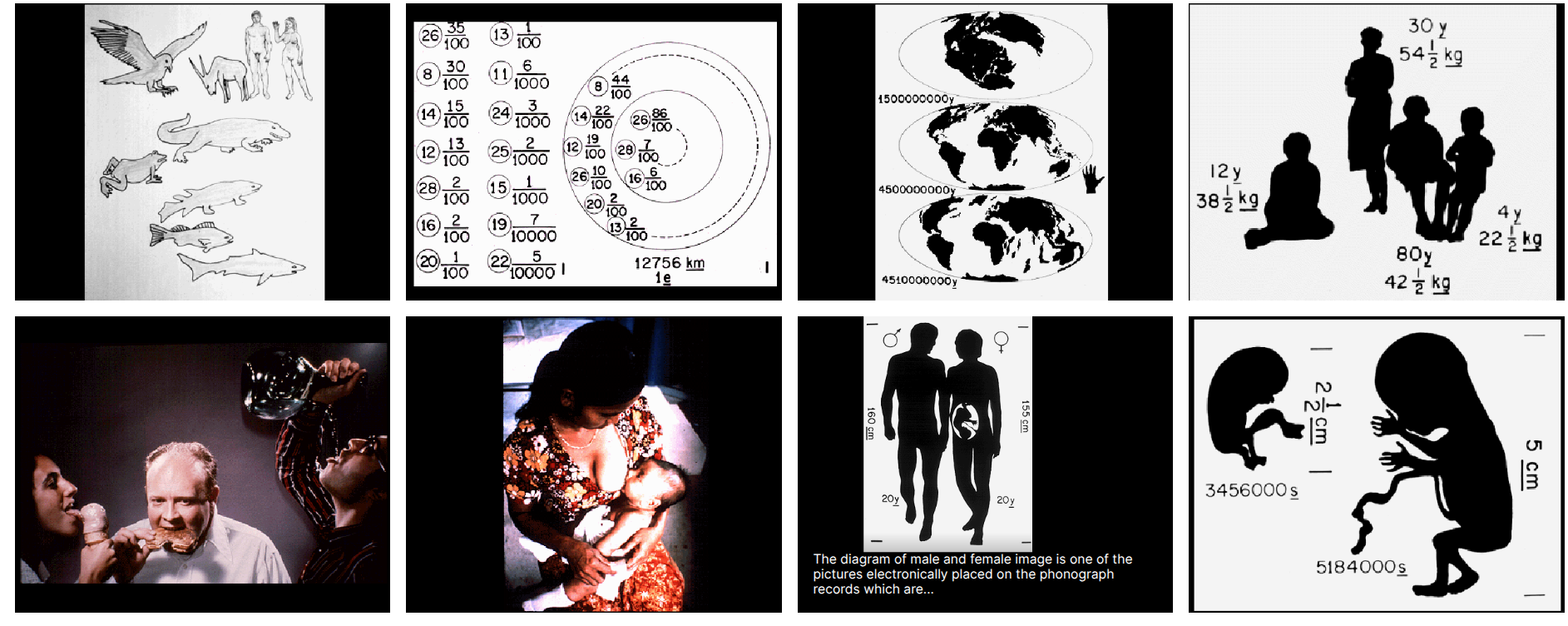
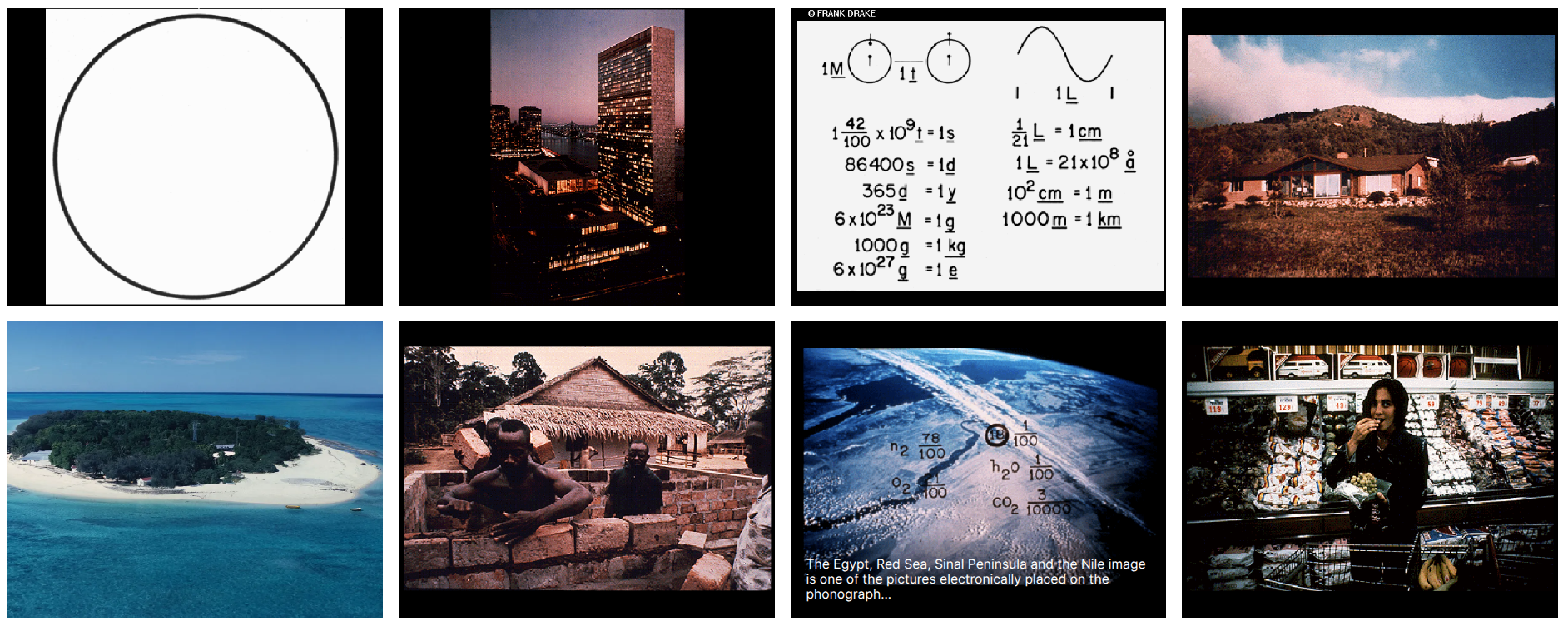
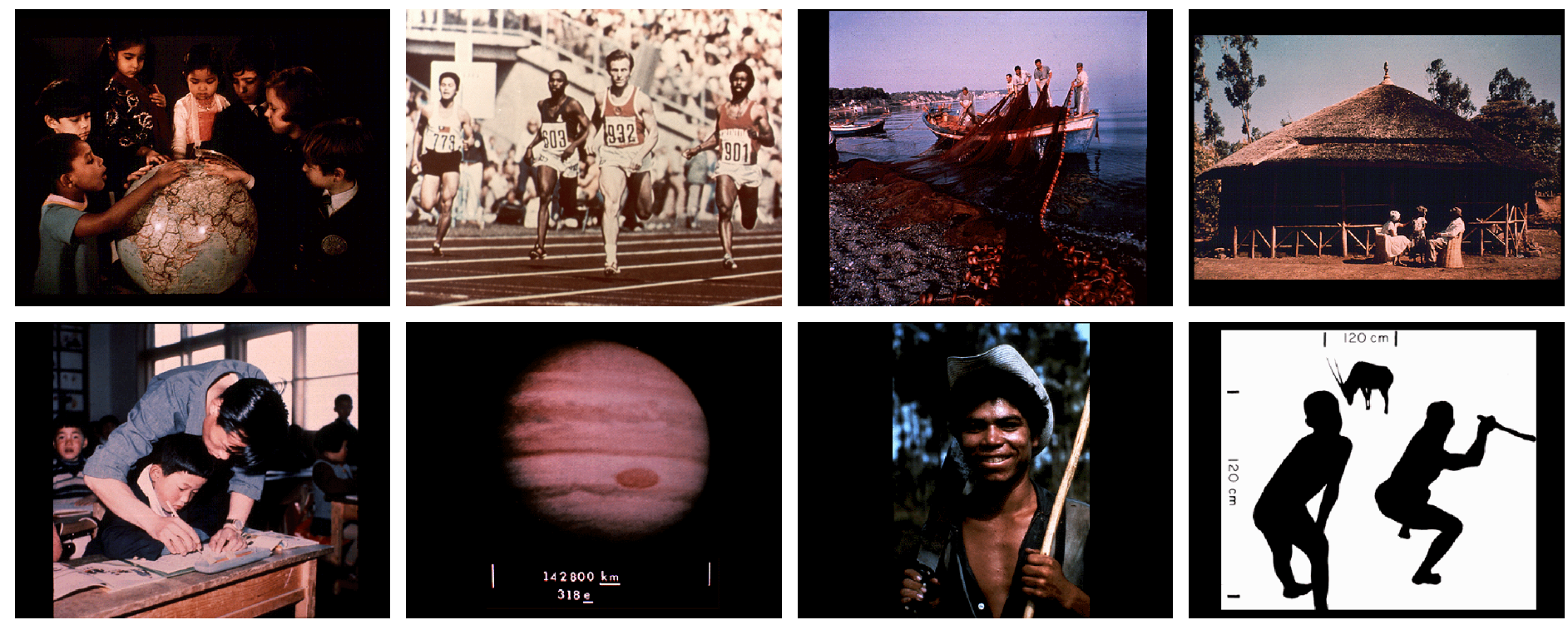
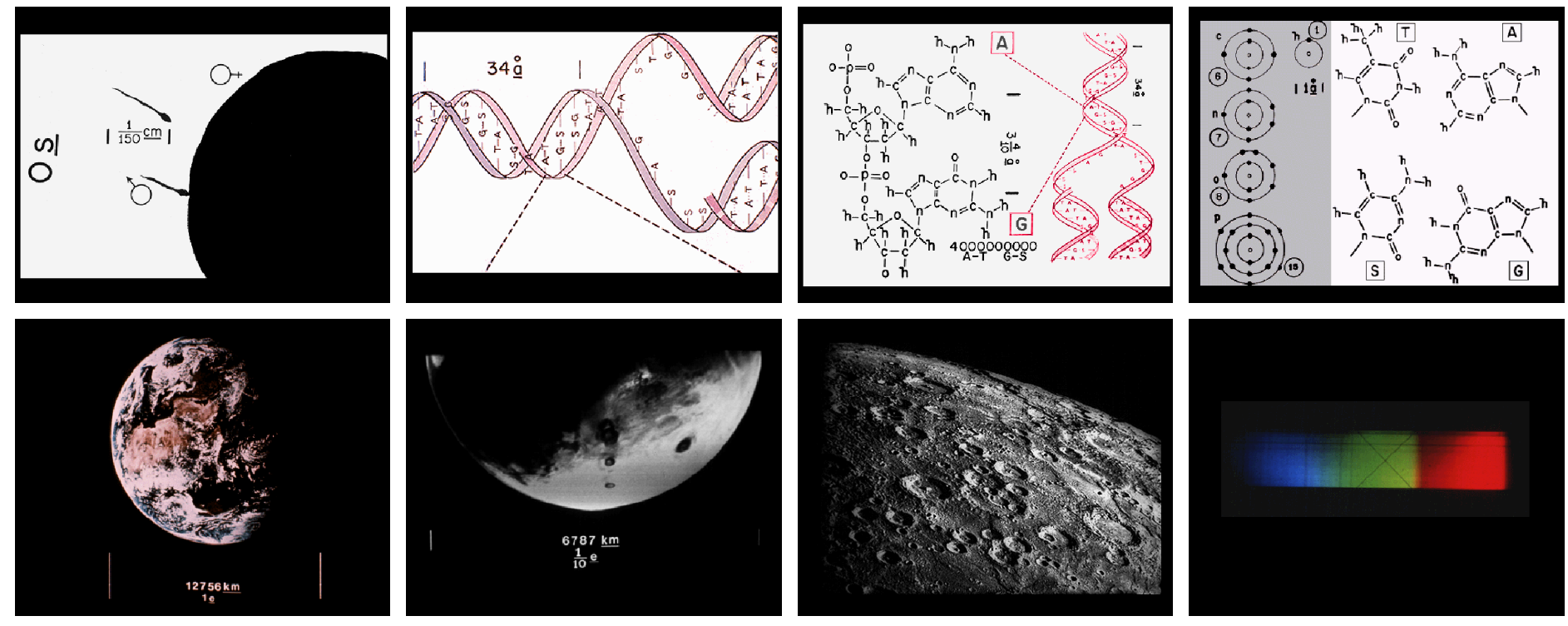
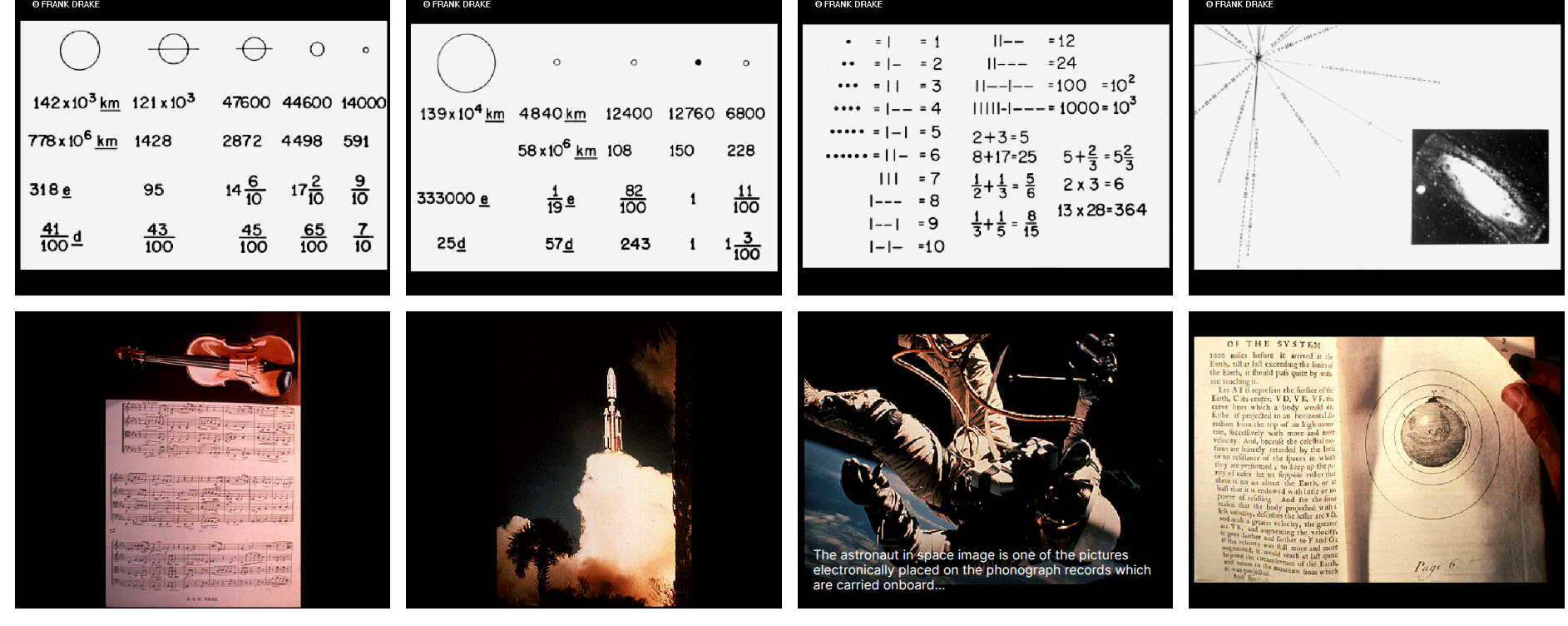
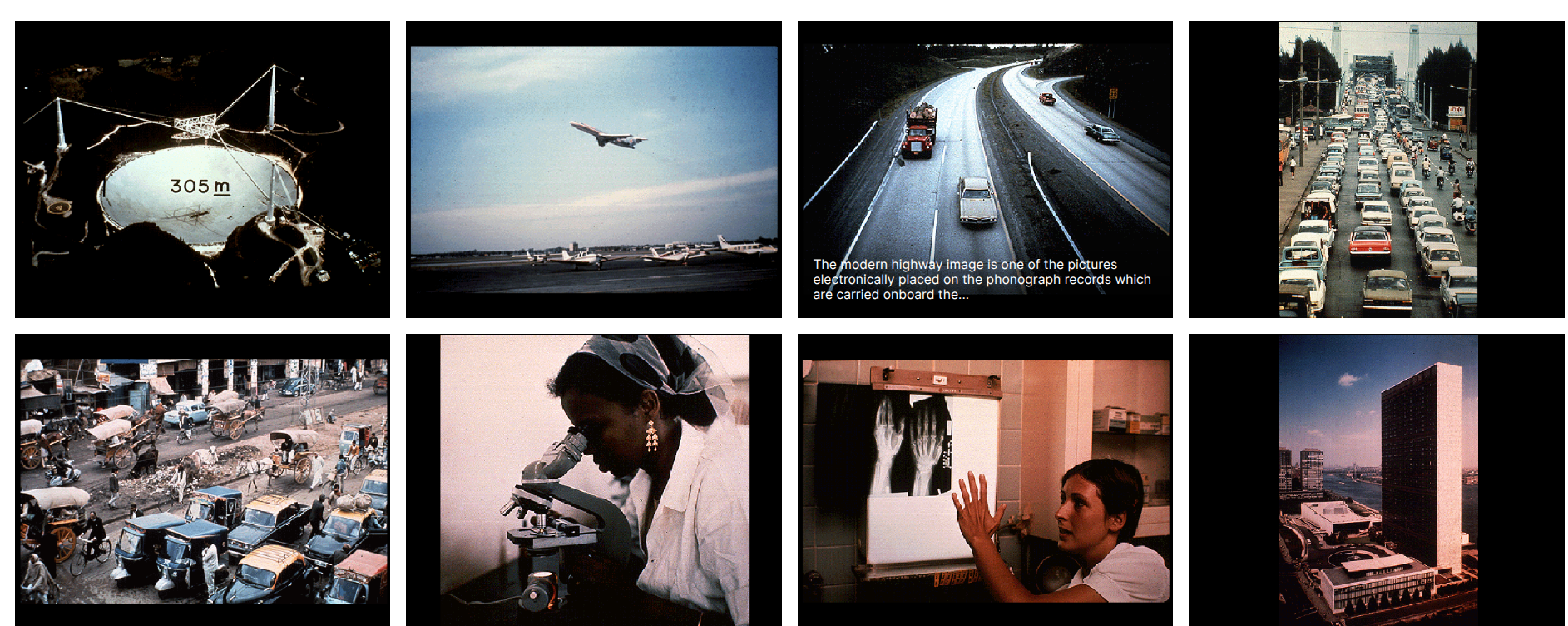
For non-humans. Bolted to each hull is a Golden Record, meant to be physically retrieved and decoded from instructions etched into its cover: how fast to spin it, where to set the stylus, how to turn signal into picture. We understood that a pattern is not a message until someone knows how to read it. The record carries greetings in 55 languages, ninety minutes of music, 115 images of the solar system, human anatomy, DNA, buildings, animals, landscapes, people eating and drinking and nursing their young, and an audio montage called Sounds of Earth, and an hour of Ann Druyan's brainwaves, recorded while she thought about human history and falling in love with Carl Sagan, compressed into a single minute of sound. We wanted so badly to tell the cosmos who we were.
The likelihood of receiving the data from the Voyager spacecrafts meant for non-humans is less than 1 in 10¹⁵.
Essentially zero percent.
What if they only received the data meant for us?
THE STORYWORLD
On Wednesday, November 18, 2026, at 2:16:07 a.m. PST Voyager 1 will reach 16.094 billion miles from Earth, becoming the first human-made object to cross one light-day from its home. In this story, that is the exact moment it crosses the outer sensory perimeter of a non-human civilization. They have listened to diffuse electromagnetic chatter drifting from our solar neighborhood for decades. It was smeared, ambient, unaddressed leakage of a species talking to itself. This is different. This is an object they can see. Unlike the babel, this was intentionally launched to communicate to someone beyond themselves.
And the object is speaking.
The non-humans do not hear our spoken greetings in Akkadian or Wu Chinese. They do not hear statements from President Carter or Kurt Waldheim; the compositions of Bach, Beethoven, or Blind Willie Johnson; the rhythms of Javanese gamelan, Navajo chants, or Chuck Berry’s guitar. They do not hear the wind, surf, thunder, birdsong, whale cries, human laughter, a child’s heartbeat, or the quiet electric hum of Ann Druyan’s mind in love.
Instead, the non-humans' first introduction to humanity is our metrology arriving as a rhythmic stream of binary telemetry, recounting the dying embers of a plutonium battery and a fifty-year-old machine dutifully reporting the magnetic pulse of the void. Pulse-Code Modulation at 160 bits per second. Engineering breath.
Here is the thing about a pattern: it is not anything until someone decides what it is. The same run of ones and zeros is a photograph, a symphony, a bank balance, a face; depending entirely on what you have agreed it stands for. Meaning is not in the pattern. Meaning is the convention you bring to it.
We built our conventions that this many bits is a temperature, this word is a voltage, this frame is the magnetic field at the edge of the sun's reach. Under our reading, the Voyager’s stream describes the health of a machine. Under theirs, the stream describes a genome.
Neither reading of the Voyager 1’s patterns is wrong. We just ascribed different meanings.
They match the stream to the patterns of their own DNA equivalent, and they build what it describes.
They think we are brilliant for bridging the distance our bodies can never physically cross, by sending instructions for creating us on their planet. This is how they can know us.
The non-humans have no idea that the being grown from that engineering chatter has no kinship with the beings who made the little object. They have no idea that what they decoded were just reports on plasma waves, magnetometer counts, and particle data. They’ve mistaken the messages from a machine describing its own slow death, for a species describing itself.
The real brilliant idea we had for them to know us was a small golden disc they will never know existed.
The Receivers
Their heredity is temporal, not spatial. Where our genetic information is a a spatial arrangement of four bases, the molecule, theirs is a cadence: a long, structured rhythm sung by a parent into a growth medium the culture calls broodwater, where pattern condenses into flesh the way our code condenses into protein. To reproduce is to compose. Their word for ancestor and their word for melody share a root. So when a structured cadence arrives from the stars, the Receivers assume it is a germ song.
Structure
A braid of three strands, with a fourth held in reserve.
ONE - Earth, 1977. This strand primarily follows the six week process of curating The Golden Record. The audience becomes an acute observer of the committee, led by Carl Segan, arguing over what we are: one fighting for the Mbuti song and the Bulgarian shepherdess against another European symphony; the fetus image debated; the things left off the record, whose absences are load-bearing. At the strand's heart is what takes place days after the group finalizes the contents, when Ann Druyan sits in a laboratory having her brainwaves recorded for the disc, trying to think about the history of ideas and instead drifting to the phone call she had with Segan a few days earlier when they decided to marry and how she is a woman recording a brain in love. This strand ends decades later, in the near future, with the last command: engineers in a quiet room switching off the final instrument, and someone, unofficially, saying goodnight.
TWO - The Receivers world, 2026. This strand follows the detection of The Voyager 1 when it crosses over the threshold of The Receivers deep space radar. The Listener is followed as they listen to chatter from earth, as they have done for decades, but in this moment he declares to their civilization that they are not alone in the universe and that another intelligence is reaching out with a message. This strand illustrates the excitement, fear, controversy, and the politics and poetics of agreeing to create an embodied version of the cadence coming from The Voyager, so they could meet The Senders (as they think of us). The Doubter publishes the truth to a culture that files it under interesting. The Midwife defends her weave of the code into the corpus of the baby, Cadence. The strand's spine is a society splitting over whether Cadence is a sacred ancestor, a contamination, or an introduction.
THREE - Cadence's voice. Interstitial, first person, brief: the being's own account of growing up as a biological ambassador for a civilization they do not know. It follows the ways in which they make-up meaning, which then becomes meaningful. Overtime the mythology of her origin becomes as real to The Receivers’ cultural and belief system as religion is on Earth. At various milestones of the development of the mythology of humans from Cadence, we are reminded of what was actually sent on The Golden Record to introduce ourselves to another civilization. See the gap between the two narratives and confront the notion that even the facts on Record are a kind of mythology of a much more complex human race with its own massive gaps in understanding. With its own ideas that filled in the void of information that made and became so meaningful that it became a part of our truth. Maybe there is a higher intelligence that understands all the patterns and understands the “mistakes” are actually part of the generative nature of creation. Like the improvisation of a great composer. Some might call it, God.
Characters
The Listener — the one who detects the cadence, at an installation built to catch the old seedings. She stakes her name on the claim that this is a germ-song, the first new ancestor in living memory. She is the story's Jocelyn Bell: the one who hears it first, names it, and is wrong in the most generative way possible.
The Doubter — her counterpart, who runs the analysis and concludes, correctly, that the cadence is mechanical: too steady, too thrifty, the pulse of a made thing rather than a sung one. The Doubter is right about everything and it changes nothing — because in Weaver law, a pattern's origin does not determine its standing. Once received, a cadence has the right to be woven. The Doubter's arc is the hardest: what do you owe a truth that no one needs?
The Midwife — the artisan who carries the cadence to broodwater and weaves it. She is the craft of the story, the one whose hands perform the mistranslation. She knows within days that what is condensing is wrong by every canon of her art — asymmetric where Weavers are symmetric, slow where they are quick, sustaining itself on a pulse no Weaver cadence has ever used. She weaves on. Her reasons are the story's moral center.
Cadence — the being. Grown through Weaver biology from a pattern that carried no biological intent, it is the child of three parents: our rhythm, their flesh, and their loving error. Its heart beats at the frame-sync rate of a space probe's data stream — literally: the clock of our telemetry is its pulse. It carries, woven through its body, a pattern it can never read, authored by no one, and it breathes.
Tone and kinships
Tender dread and awe, never horror. The anthropological patience of Le Guin; the structural grace of Ted Chiang's "Story of Your Life" and its film, Arrival; Solaris's ocean. The Receivers are never comic and never menacing. Their error is the most sympathetic thing about them, because it is ours: they received a stranger's signal and heard themselves.